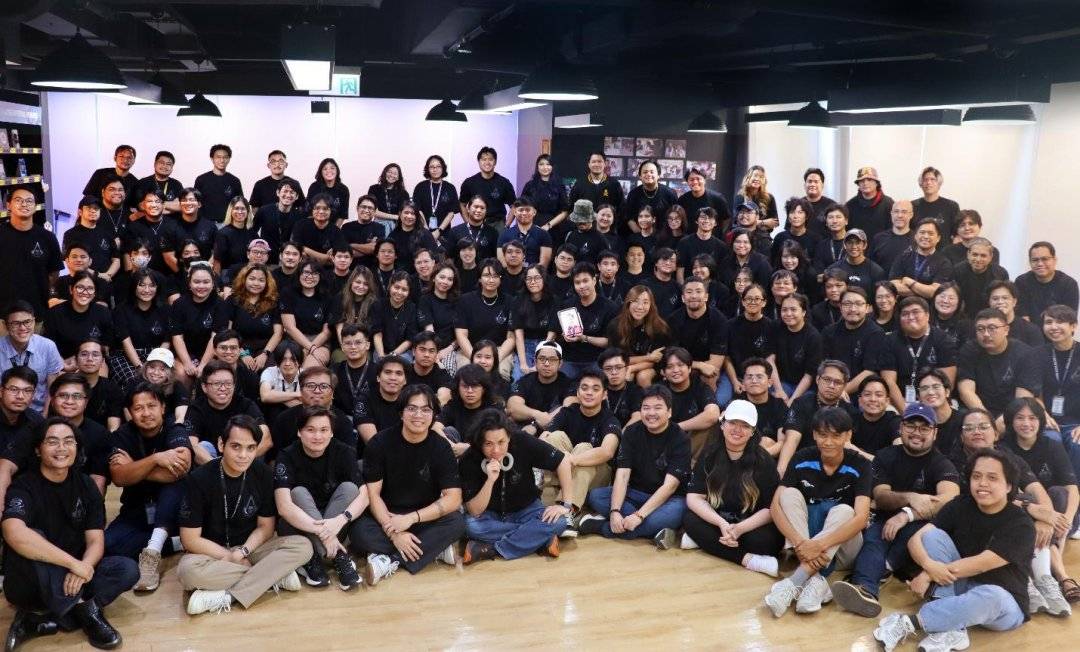
Ubisoft Philippines just contributed to what may be their most successful project yet in Assassin’s Creed Black Flag Resynced.
As Ubisoft Philippines celebrates its 10th anniversary this year, the celebration also comes with the release, critical, and commercial success of Assassin’s Creed Black Flag Resynced, the long-awaited remake of the 2013 fan-favorite Assassin’s Creed title. This would mark the studio’s 13th AAA flagship contribution, codeveloping with other Ubisoft studios around the world, with Ubisoft Singapore taking the lead.
Associate Producer Alfonse Angliongto, the project lead, shared that this has become the largest project in terms of scale undertaken by the studio. “This
was the first time the studio was entrusted with a project of this scale, with full responsibility and accountability for driving its successful delivery.”
It’s also a challenge to remake a well-loved entry in the series, so the team approached the project with a clear mandate: preserving what made Black Flag iconic while elevating it to meet modern gaming standards. To this, Ubisoft Philippines Art Director JP Tan says: “Our fans come first. Before working on Resynced, we looked at all the fan feedback and suggestions to see what parts of the game that they liked and the parts that needed improvement. We spent a good chunk of time reading through online forums, watching game reviews and fan walkthroughs to understand what the players enjoy in Black Flag.”
Tan also contributed as a developer in the original Assassin’s Creed IV: Black Flag.
Ubisoft Philippines developed key locations in the game, reimagining Kingston, Port Royale, Long Bay, and other iconic settings central to major quests, extending to several main story missions, Templar Hunts, and Assassin Contracts.
“Looking back at the time when we worked on the original Black Flag, the art direction pillars were to introduce the vibrancy of the Caribbean and to showcase the grittier side of the pirate’s life. Fast forward to today, we wanted to be faithful to those original intentions together with the modern advancements of the Anvil engine,” Tan further explained. The Anvil Engine is Ubisoft’s proprietary development engine previously used for Assassin’s Creed Shadows, which the team also co-developed.
One of the most notable innovations that Ubisoft Philippines contributed to the game was its reimagining of Fort sieges. In the original, the Fort side activity ended once the fort was captured, but Ubisoft Philippines added a small but impactful detail to expand the game’s immersion. In the remake, we enhanced player expression and the narrative aspects to give players a more satisfying conclusion for the gameplay loop. In the original, Edward easily opens the Fort’s war room, and the commander raises his arms in surrender, waiting for Edward to deal the killing blow. In the remake, we fleshed out the narrative with the Fort Commander barricading himself in the war room. Edward’s crew now helps him force the war room door open, after which, the Fort Commander would hurl threats and attack Edward and his crew as a final act of defiance. After going through all this, the player will be rewarded by seeing the crew celebrating and looting. This communicates to the player that they did something that affected the world,” says Lead Game Designer Choogs Tan.
The Philippines team also redesigned the Harpooning side activity, one of Assassin’s Creed Black Flag‘s unique mini-games that perfectly fits the Pirate Adventure fantasy. Animators drew extensively on real-world references to transform the original experience into more visceral encounters. Players now feel the full force of the struggle as Edward Kenway’s movements react dynamically to the animals he hunts. “We wanted Harpooning to be more physics driven,” shares Lead Programmer Dennis Li. “In the original, once the harpoon hits the target, the rope is immediately taut until you capture the animal or the rope breaks. In the remake, it responds dynamically to player input and movement: when you aim the harpoon, when it’s thrown, when it hits the target, when the boat moves closer or farther. It seems very simple, but there’s a lot of things happening to make it just right.”
The team also contributed to Quality Assurance, drawing from their experience doing QA from as far back as Assassin’s Creed 3 Remastered. QA Team Lead Joven Falcon shares: “The most memorable moments were the bugs that became memes, and the memes that became milestone markers. Because as we laughed at the absurdity of the bugs we hunted, those moments would eventually become reminders of how far we’d come, milestone after milestone.”
Assassin’s Creed Black Flag Resynced is out now on PS5, Xbox Series X/S, and PC via Steam and Ubisoft Connect.